Before machine washing, confirm both halves of the care decision:
Drying starts before the wash
A shoe may tolerate water and a wash cycle but still be unsuitable for tumble drying. Heat can affect materials, foam, glue, coatings, shape, or fit. A shoe washing bag cannot change those limits.
If you cannot find drying instructions for the exact model, do not assume that a dryer is safe. Contact the manufacturer or choose a conservative material-appropriate method.
- Is machine washing allowed?
- What drying method is allowed afterward?
1. Remove the shoes when the wash finishes
Do not leave wet shoes sitting inside the washer or a closed bag longer than necessary. Remove the shoes and follow the care instructions for that pair.
2. Open the shoe for airflow
Remove or loosen the laces when appropriate. Take out removable insoles if they are designed to come out. Opening the shoe allows the components to dry separately and makes it easier to check the interior.
Do not force out fixed insoles or glued parts.
3. Remove excess surface moisture gently
Use a clean, absorbent cloth to blot accessible moisture when the material permits. Do not twist, wring, or aggressively deform the shoe.
4. Support the shape when appropriate
Some official guides suggest placing clean absorbent paper or cloth inside the shoe to help absorb moisture and support its shape. Avoid heavily printed paper that could transfer ink. Replace wet material as needed.
This is a general technique, not a requirement for every shoe. Follow model-specific instructions when they differ.
5. Choose a ventilated drying location
Place the shoes where air can circulate. Official guidance commonly recommends air drying and avoiding intense direct heat. Nike advises a dry, well-ventilated indoor area away from direct sunlight for its general drying method. Adidas guidance for running shoes also emphasizes air drying and warns against dryer heat for the shoes discussed.
6. Wait until every component is dry
The upper may feel dry before the insole, lining, or toe area is ready. Check removable insoles and laces separately. Reassemble and wear the shoes only after all components are fully dry.
Do not promise a universal drying time. Time varies with construction, absorbency, room conditions, airflow, and how wet the shoes were.
Air drying, direct sunlight, and fans
Source guidance can differ. Some general laundry articles mention sunlight, while shoe brands may warn that intense sunlight or heat can affect materials. The exact shoe manufacturer is the stronger authority for the shoe.
A fan can improve airflow without applying the concentrated heat of a hair dryer or radiator. Keep the airflow moderate and follow the shoe instructions.
Avoid treating “faster” as automatically “better.” High heat can create risks that a longer air-drying period avoids.
Can sneakers go in a tumble dryer?
Only when the manufacturer of the exact shoe permits it and the dryer instructions support the method. Do not infer dryer permission from machine-wash permission.
Some dryers offer racks that hold suitable items stationary, but owning such a rack does not establish that a particular shoe can be dried with heat. Check both the shoe guidance and dryer manual.
When official instructions say to air dry or avoid the dryer, follow them.
Dry the washing bags separately
Shoe care and bag care are different decisions.
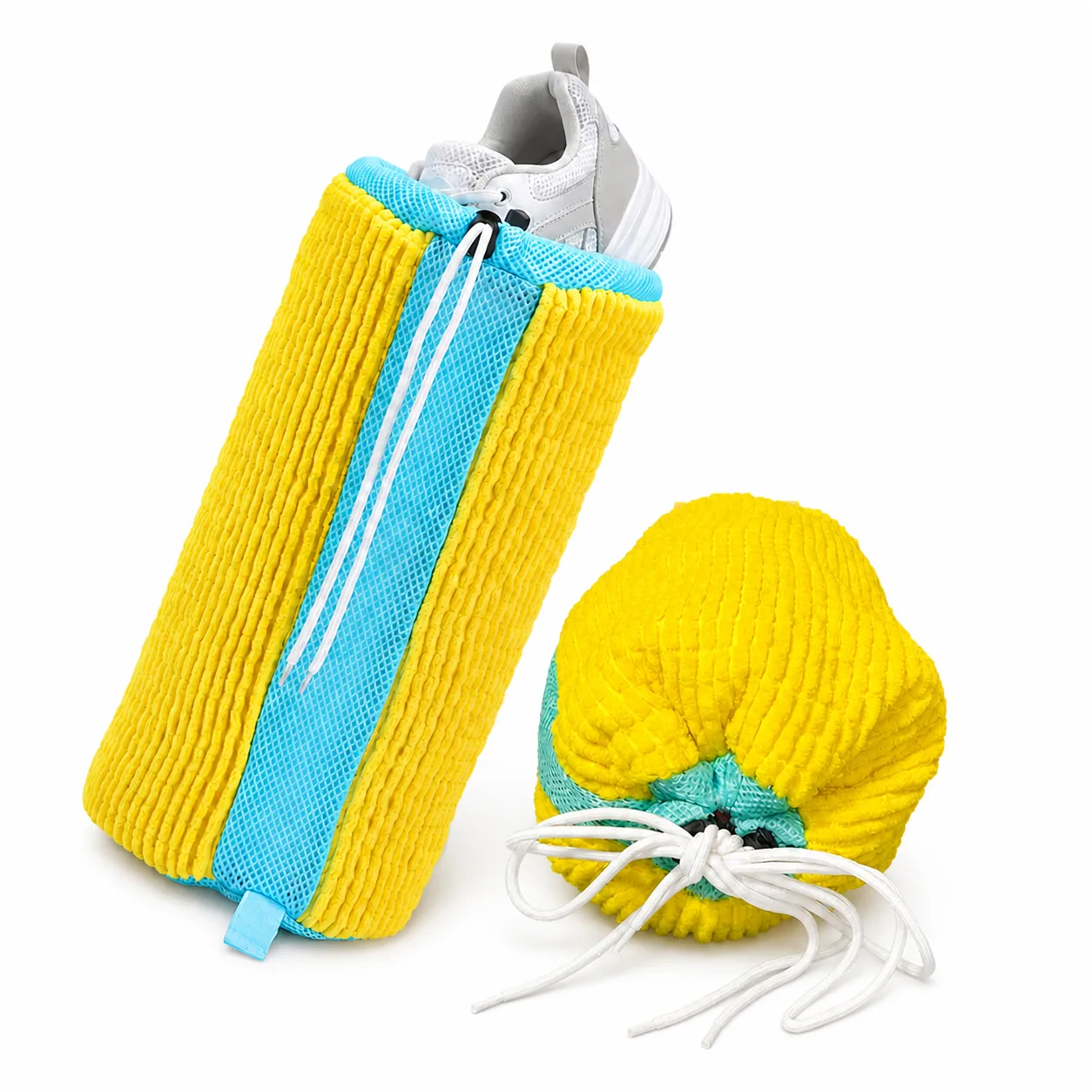
EMOZNY Shoe Washing Bags may be dried on low heat after both removable cord locks are taken off. Remove the shoes first and treat them according to their own instructions. Do not use the bag’s low-heat permission as evidence that the shoes can go into the dryer.
Before reinstalling the cord locks, confirm that the bags and drawstrings are dry and that the locks are attached as intended.
Signs the shoes need more time
Allow additional drying time when:
Do not store a damp pair in a closed box, gym bag, or closet.
- The lining or toe area still feels cool and damp.
- A removable insole bends or feels wet.
- Moisture appears when an absorbent cloth is pressed inside.
- The shoes were reassembled before the components had dried separately.
- Airflow around the shoe has been limited.
Limits to keep in mind
- No universal drying time, temperature, or airflow setting is stated.
- Source disagreement about sunlight is resolved by giving priority to the exact shoe maker’s instructions.
- The article does not claim that a drying method prevents all deformation, odor, or material change.
Frequently asked questions
How long do sneakers take to air dry?
There is no universal time. Construction, room conditions, airflow, and moisture level all matter. Wait until the upper, lining, laces, and insoles are completely dry.
Can I use a hair dryer?
Avoid concentrated heat unless the shoe manufacturer explicitly permits it. Airflow without intense heat is the more common general recommendation.
Should I put newspaper inside wet sneakers?
Clean absorbent paper can help manage moisture and support shape when appropriate. Avoid ink transfer and replace wet paper. Follow the exact shoe instructions.
Can I dry sneakers in direct sunlight?
Check the shoe maker’s guidance. Some manufacturers warn against intense direct sunlight or heat because materials can change.
Can the EMOZNY bags go in the dryer?
Yes, on low heat after both removable cord locks are removed. This does not mean the shoes can go in the dryer.
Sources and scope
These sources provide general shoe-care and washer guidance. Instructions for the exact shoe model remain the final authority.
- Nike — 2 Best Ways to Dry Your Shoes Without Damaging Themsupports removing insoles or loosening laces, using absorbent material, ventilation, and avoiding direct sunlight.
- Nike — How to Clean Your Shoes in 6 Easy Stepssupports room-temperature air drying and avoiding dryer heat for delicate shoe materials.
- adidas — How to Clean Running Shoessupports removing laces and insoles, air drying, and avoiding a dryer for the shoes covered by that guidance.
- Whirlpool — How to Wash Shoes in the Washing Machinesupports complete air drying and illustrates that washer, shoe, and dryer guidance must be read together.