Finishing a wash is not the same as being ready to put shoes away. Drying guidance tells you how to remove moisture; storage guidance answers the next question: whether every component is dry and whether the chosen place exposes the pair to moisture, sun, or excessive heat. Current Salomon and FootJoy instructions provide useful but shoe-specific examples.
Make complete drying the first storage test
Do not put a pair away simply because the outside feels dry. Check the lining, tongue area, removable insole, laces, and other places that can hold moisture. If a component is still damp, continue with the drying method permitted for that shoe rather than closing it into storage.
Salomon's hiking-shoe guidance says shoes should dry completely at room temperature in a well-ventilated area before the insoles are put back in. That is a practical readiness test for its footwear, not a claim that every shoe uses the same construction or drying timeline.
Choose an open, dry place when the maker supports it
For its hiking shoes, Salomon recommends storage in the open air, in a dry place away from moisture and sunlight. For longer storage, it specifically says not to use a plastic bag or airtight box.
Use that as a source-scoped example of a storage environment, not a universal container rule. The material, construction, and instructions for the exact pair still decide whether a shoe tree, shelf, box, or another setup is appropriate.
Keep high heat out of the storage decision
FootJoy warns against storing golf shoes in a car trunk because high temperatures can break down shoe materials. It also directs users to air dry at room temperature and avoid direct sunlight and external heat.
This golf-shoe guidance does not establish a temperature rule for every type of footwear. It does show why a place that becomes hot can be a different risk from ordinary indoor storage, even after the shoes appear dry.
A washing bag is not a storage instruction
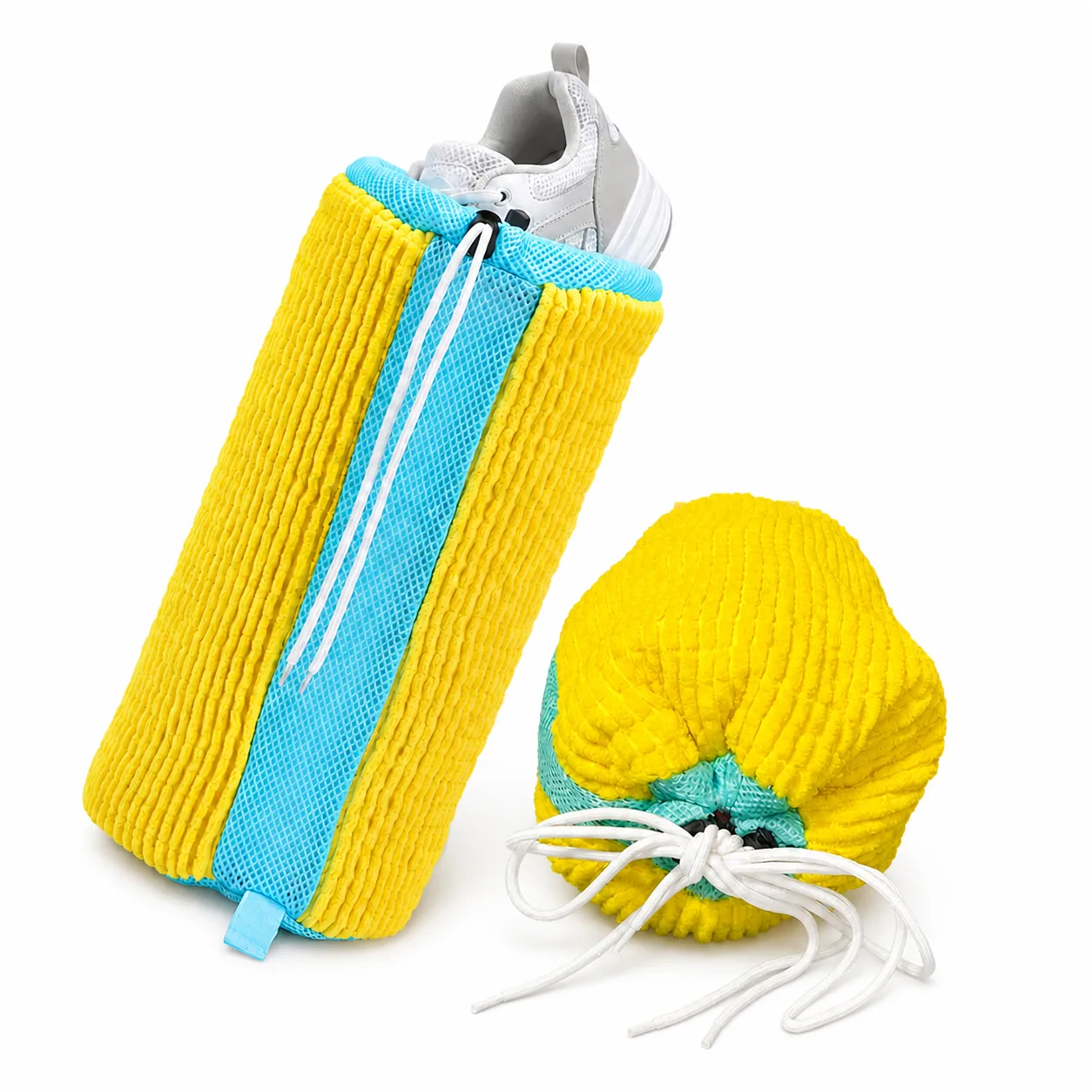
If a shoe maker permitted a machine wash, EMOZNY Shoe Washing Bags, 2 Pack can hold one shoe in each bag during that permitted load. Remove the shoes after the cycle and follow the pair's own drying and storage guidance.
A bag does not establish that a shoe is dry, choose a storage location, or override the shoe maker's limits. Use it only within the care route that has already been confirmed for the exact pair.
Use this put-away check after cleaning
Before placing washed shoes on a shelf, in a closet, or in a travel space, pause at these decision points.
- Check that the upper, lining, insole, and laces are completely dry.
- Follow the exact shoe maker's drying and storage instructions when they are available.
- Keep manufacturer-specific examples separate from universal rules for other shoes.
- Avoid turning a hot car, direct sun, or a closed container into an assumed storage solution.
- Do not use a washing bag as evidence that the pair is ready to be stored.
Decide what to do at the shelf
This is a put-away checklist, not a fixed drying-time estimate. How long a pair takes to dry depends on its construction and conditions.
- The outside is dry but the lining or removable insole is damp: keep the pair out of closed storage and continue the maker's permitted drying method.
- Every component is dry: reassemble only as the maker directs, then choose a storage location appropriate for that footwear.
- The available location gets hot or traps moisture: choose another suitable location; being dry does not remove the storage-location concern.
- Preparing for travel: finish drying before packing. Do not treat a washing bag as evidence that damp shoes are ready to put away.
Frequently asked questions
Can I put shoes away when the outside feels dry?
Not necessarily. Check the lining, removable insole, laces, and other areas that may still hold moisture. Salomon says its hiking shoes should be completely dry before the insoles go back in; follow the exact maker's instructions for your pair.
Should washed shoes be stored in a plastic bag?
Salomon says not to use a plastic bag or airtight box for seasonal storage of its hiking shoes. Treat that as hiking-shoe guidance, then check the material and storage instructions for the shoes you have.
Can I keep shoes in a car trunk after washing?
FootJoy warns against car-trunk storage for golf shoes because high temperatures can break down shoe materials. This is not a universal rule, but it is a reason to check whether the storage location becomes hot for your pair.
Can I leave shoes in a washing bag after the cycle?
No storage instruction follows from the bag. For a permitted wash, use one shoe in each EMOZNY bag, then remove the shoes and follow the exact pair's drying and storage guidance.
Sources and scope
These sources provide general shoe-care and washer guidance. Instructions for the exact shoe model remain the final authority.
- Salomon — How to Clean and Care for Your Hiking ShoesVerified 2026-09-01. Supports complete drying before storage, open-air storage in a dry place away from sunlight, and Salomon's no-plastic-bag/no-airtight-box guidance for its hiking shoes.
- FootJoy — Golf Shoe CareVerified 2026-09-01. Supports FootJoy's room-temperature air-drying route and its warning against hot car-trunk storage for golf shoes.
Choose your next step
If any component is still damp, return to the drying stage. Review the shoe-drying steps →