Mud, waterproof features, reinforced areas, foam, and glued construction make hiking and trail footwear a different decision from an everyday sneaker. The word trail does not tell you whether a washer is suitable. Start with the exact pair's care instructions, then choose the smallest cleaning step that those instructions support.
Hiking and trail are not machine-wash permissions
A hiking shoe can be lightweight and synthetic, while another pair may have leather, a waterproof membrane, reinforced panels, or a heavily lugged outsole. Those details matter more than the category name. The care label or the official instructions for the exact model control the decision.
Salomon's current footwear-care guidance says its shoes should never be cleaned in a washing machine. Columbia likewise advises against putting hiking boots and shoes in washers or dryers. These are manufacturer positions for their footwear, not a rule that replaces instructions from another brand.
Start by removing trail debris outside the washer
Loose mud, pebbles, and dirt do not by themselves require a full wash. Salomon starts with a soft brush and clean water. Columbia describes dry brushing or removing caked mud from the outsole before choosing a broader cleaning step.
Let wet mud dry enough to remove without spreading it through the upper. Work from the tread outward, and use the shoe maker's material guidance for the upper, lining, and any waterproof feature. This is a cleaning path, not a claim that it restores traction, waterproofing, or appearance.
Why a washer can be the wrong tool for the pair
Columbia explains that detergent, heat, and spinning can affect adhesive bonds in hiking footwear. ASICS also points to synthetic fibers, gluing techniques, and foam construction when it cautions against machine washing its running shoes. A particular trail shoe may have its own construction and instructions, so keep each source with the footwear it addresses.
A water-resistant or waterproof label does not settle the question. Check whether the maker gives a specific cleaning route for that material or membrane before using water, detergent, heat, or a washer.
Air drying is a separate instruction
For its footwear, Salomon calls for room-temperature drying without an external heat source or sun. Columbia similarly recommends open-air drying in a dry location away from sun after cleaning hiking footwear.
Do not turn that guidance into a claim about every brand or every shoe. The drying method must still come from the exact pair's care instructions, especially if the shoe uses leather, adhesives, membranes, foam, or other construction that needs a particular route.
Use this trail-footwear decision check
Answer these questions before putting any hiking or trail shoe in a washer.
- What does the exact shoe maker say about machine washing and drying?
- Are leather, waterproof materials, reinforced areas, loose trim, or damaged glued sections present?
- Can dry mud, stones, or surface soil be removed with a brush or smaller cleaning step first?
- Does the maker describe a material-specific cleaner or a special route for a membrane?
- Is this exact shoe explicitly marketed and instructed as machine washable, including the cycle and drying method?
Where a shoe washing bag fits—and where it does not
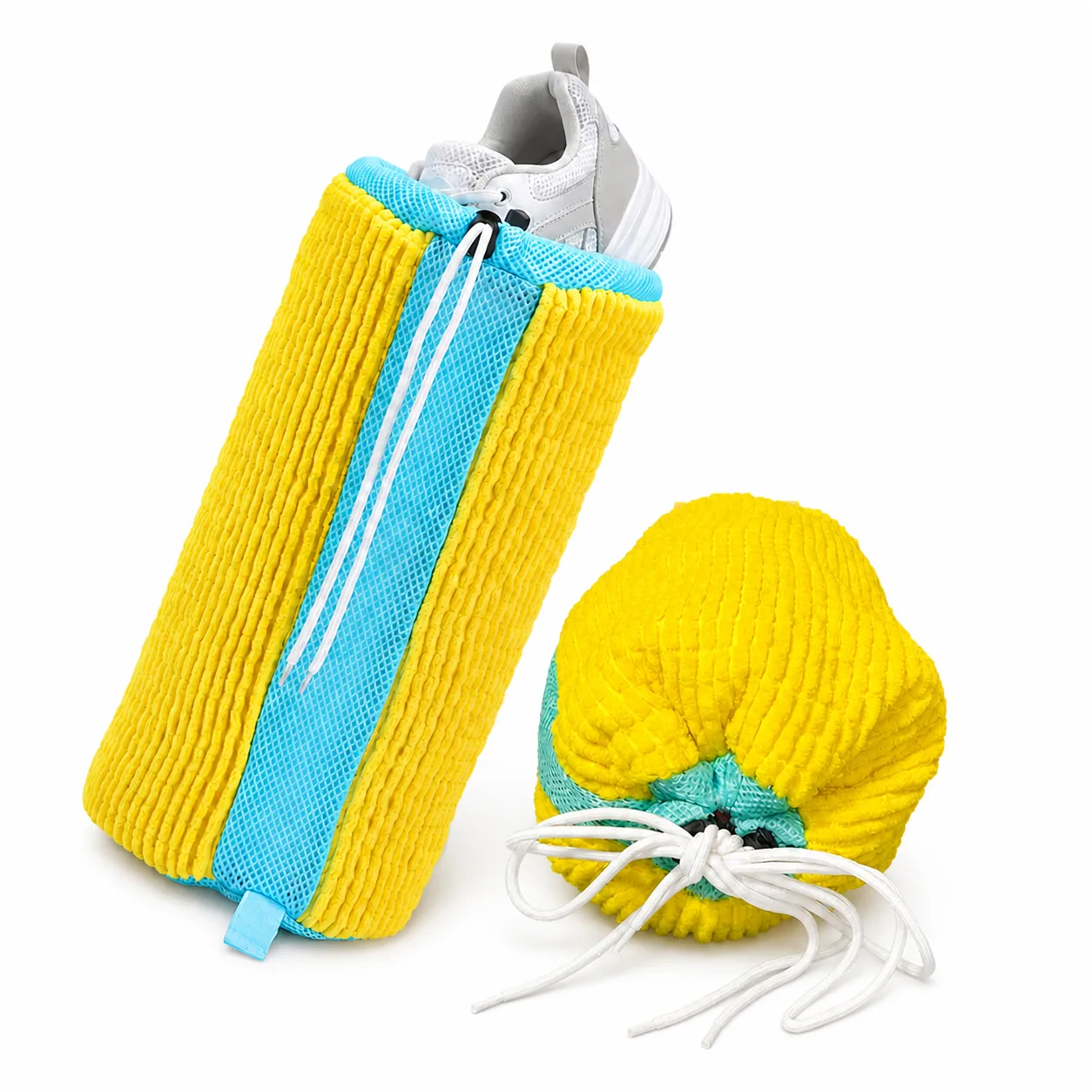
Only when the exact shoe maker permits machine washing can EMOZNY Shoe Washing Bags, 2 Pack hold one shoe in each bag during that permitted wash. The bags do not decide that a hiking or trail shoe is suitable for the washer, and they do not change the maker's cycle, detergent, load, or drying instructions.
- Do not use a bag to override a no-machine-wash instruction.
- Do not treat a bag as a waterproof-membrane, adhesive, or material-care instruction.
- Do not assume that a bag changes the shoe maker's drying method.
Frequently asked questions
Can I put trail running shoes in a washing machine?
Do not assume so. Salomon and ASICS advise against machine washing their footwear. Follow the exact maker's instructions for your pair; a category name does not establish permission.
Can I wash hiking shoes if they are synthetic?
Not automatically. Columbia says even synthetic hiking shoes should not go into a washer or dryer unless the shoe is specifically marketed as washable. Check the exact product guidance.
How should I remove dried mud from hiking shoes?
Start with a brush and remove caked mud or stones from the outsole. Salomon and Columbia provide that as a smaller care step; then follow the maker's material-specific cleaning instructions.
Will a shoe washing bag make hiking shoes machine washable?
No. A bag can contain one shoe during a wash the maker already permits, but it cannot override the pair's materials, condition, waterproof features, or care instructions.
Sources and scope
These sources provide general shoe-care and washer guidance. Instructions for the exact shoe model remain the final authority.
- Salomon — Footwear CareVerified 2026-08-27. Supports debris removal, no machine washing for Salomon footwear, and room-temperature drying without external heat or sun.
- Columbia — How to Clean Hiking BootsVerified 2026-08-27. Supports the hiking-boot and hiking-shoe no-washer/no-dryer guidance, brush or mild-soap cleaning route, open-air drying, and the explicitly-marketed-washable exception.
- ASICS — Running Shoe Cleaning and MaintenanceVerified 2026-08-27. Supports material-aware mud removal and explains why ASICS cautions against machine washing its glued, foam, and synthetic-fiber running shoes.
Choose your next step
For a pair with GORE-TEX, use the footwear-specific cleaning route before considering a washer. Clean GORE-TEX footwear →