Use this list before water, detergent, or a washing bag is involved.
The checklist
If any required answer is missing, pause and confirm it rather than treating the washing bag as permission.
- [ ] The exact shoe manufacturer permits machine washing.
- [ ] Leather, suede, electronics, lights, loose ornaments, and delicate trim have been ruled out or explicitly approved by the maker.
- [ ] Seams, glued edges, coatings, prints, and decorations are not lifting or failing.
- [ ] Loose mud, stones, and surface debris have been removed.
- [ ] Laces and removable insoles have been handled according to their instructions.
- [ ] One dry shoe fits in each washing bag without force.
- [ ] Both drawstrings can close as intended.
- [ ] The shoe instructions identify an acceptable cycle, water temperature, and detergent.
- [ ] The washer loading instructions can be followed without overloading the drum.
- [ ] A permitted drying method is ready before the cycle starts.
1. Find a clear machine-wash instruction
Look for a sewn-in care label, packaging instructions, product-care page, or current support answer for the exact shoe model. The word “sneaker” is not enough. Shoes within the same category can use different foam, glue, linings, coatings, and trim.
A clear instruction permitting machine washing is stronger evidence than appearance or general internet advice. If the label says hand wash, spot clean, or do not machine wash, follow it.
When the instructions are missing, treat machine washing as unconfirmed. Contact the manufacturer or use an appropriate hand-cleaning method.
2. Check the most sensitive material
Judge a mixed-material shoe by the component least likely to tolerate water, agitation, detergent, or heat.
Stop and obtain model-specific guidance when the shoe includes:
A textile upper cannot make every other component machine washable.
- Leather or suede.
- Delicate trim or loose ornaments.
- Lights, electronics, or batteries.
- Specialty coatings or printed finishes.
- External parts that can catch, loosen, or detach.
3. Inspect the shoe’s current condition
Washing can add water and movement to damage that already exists. Examine:
Do not machine wash a shoe that is already separating unless the manufacturer gives a specific repair-and-care instruction.
- Glued edges around the sole.
- Seams and stitching.
- Peeling coatings or prints.
- Cracked foam or rubber.
- Loose eyelets, decorations, or overlays.
- Interior lining and fixed insole areas.
4. Remove loose dirt first
Official shoe and washer guidance commonly recommends brushing or wiping away loose dirt, mud, stones, and debris before washing. Pay particular attention to tread channels and the outsole.
This step keeps material that can be removed dry from circulating through the wash. It also makes pre-existing damage easier to see.
Use a tool appropriate for the material. Do not scrape delicate uppers or apply a stain treatment without checking compatibility.
5. Decide what to do with laces and insoles
Removing laces and removable insoles is commonly recommended, but exact instructions still control.
This is a component-care decision, not a function of the shoe washing bag.
- Machine-wash permitted laces only when properly contained.
- Clean removable insoles by the stated method; hand cleaning is often recommended.
- Do not force out a fixed or glued insole.
- Allow every removed component to dry completely before reassembly.
6. Check the washing-bag fit while the shoe is dry
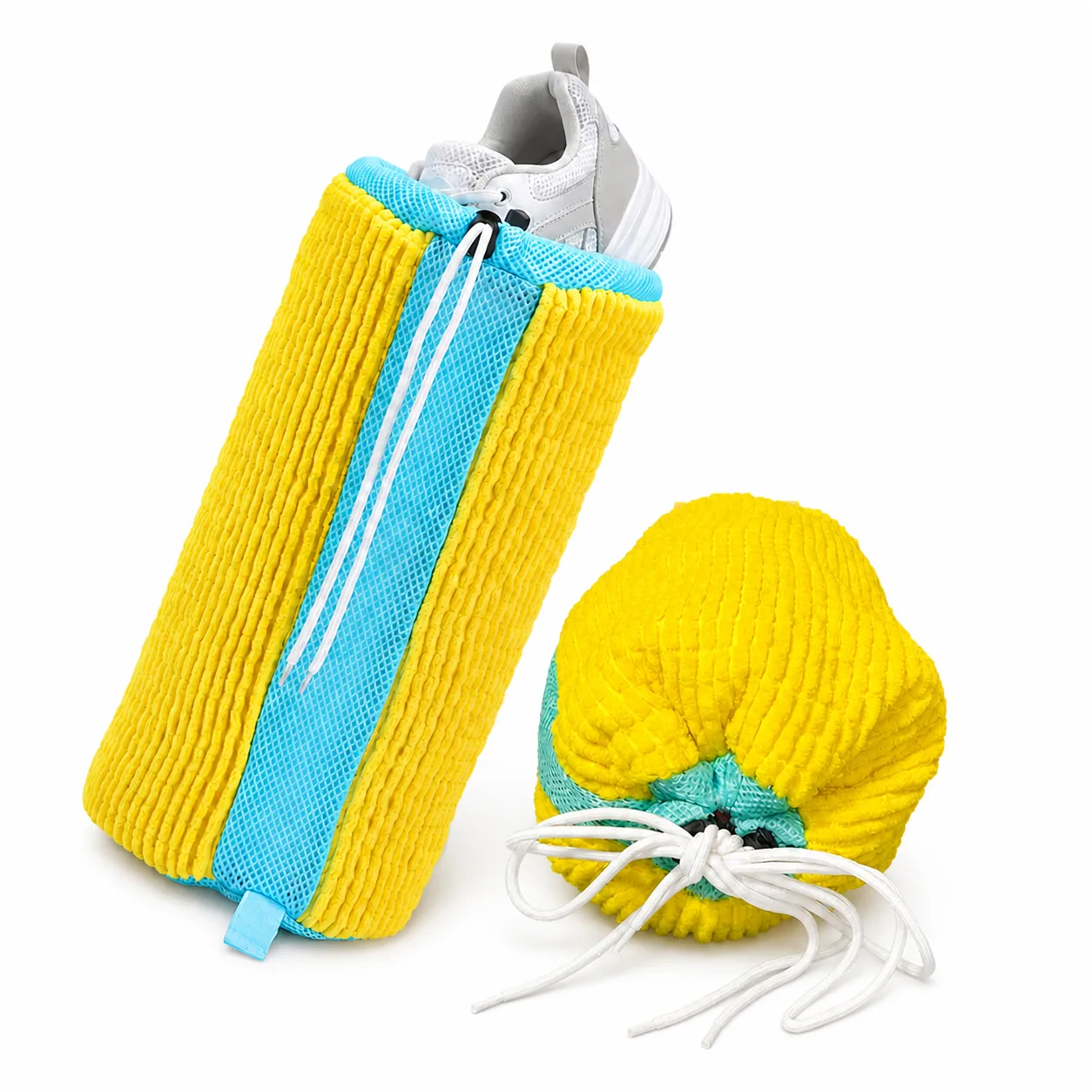
For EMOZNY Shoe Washing Bags, 2 Pack, place one shoe in each bag. Each bag measures 15.4 × 7.5 × 7.5 inches.
Physical fit checks included men’s size 13 sneakers and many size 14–15 athletic shoes, but numbered size is not a complete fit guarantee. High tops, thick midsoles, broad toe boxes, and external structures can change the fit.
Do not force a shoe through the opening. Confirm that both drawstrings can close as intended.
7. Confirm the wash settings
General official guidance often mentions cold water and a gentle or delicate cycle. That does not establish one universal setting.
Use the cycle, water temperature, detergent type, and spin guidance permitted for the exact shoe. Follow the washer manual for loading and balance. Do not choose a hotter or more aggressive setting simply because the shoe is inside a bag.
EMOZNY bags have been used in front-load and top-load machines, but washer-specific loading instructions still apply.
8. Plan the drying method before starting
Do not wait until the shoes are wet to ask whether they can enter a dryer. Machine-wash permission and tumble-dry permission are separate.
Many shoe manufacturers recommend air drying. Prepare a ventilated location and, when appropriate, clean absorbent material to support shape and manage moisture. Avoid direct heat unless the exact shoe instructions permit it.
The EMOZNY bags may be dried on low heat after both removable cord locks are taken off. That instruction applies to the bags, not the shoes.
Stop signs
Do not continue with a machine wash when:
The correct next step may be hand cleaning, material-specific care, manufacturer support, or professional cleaning.
- The maker prohibits it.
- The care method is unknown.
- A sensitive component has no machine-wash approval.
- Glue, seams, trim, or coatings are already failing.
- The shoe does not fit the bag without force.
- The washer cannot be loaded according to its instructions.
- No permitted drying method is available.
Limits to keep in mind
- The checklist cannot determine the washability of an unidentified shoe.
- It does not prescribe a universal detergent, cycle, temperature, drying time, or stain treatment.
- It does not claim that passing the checklist guarantees no damage.
Frequently asked questions
Is a cold, gentle cycle safe for every sneaker?
No. It is common general guidance, not universal permission. The exact shoe instructions must allow machine washing and the selected settings.
Can I machine wash shoes if the care label is missing?
Treat machine washing as unconfirmed. Look for current guidance from the shoe manufacturer or choose a material-appropriate hand-cleaning method.
Should I remove mud before using a washing bag?
Yes. Brush or wipe away loose mud and debris using a method appropriate for the shoe material before placing the shoes in the bags.
How do I know whether a shoe fits the EMOZNY bag?
Check the dry shoe against the 15.4 × 7.5 × 7.5-inch bag. Use one shoe per bag, do not force it, and confirm that both drawstrings close.
Does the bag protect shoes with loose glue or damaged seams?
Do not rely on a washing bag to repair or protect failing construction. Existing damage is a reason to stop and choose another method.
Sources and scope
These sources provide general shoe-care and washer guidance. Instructions for the exact shoe model remain the final authority.
- Whirlpool — How to Wash Shoes in the Washing Machinesupports checking care instructions, removing laces and insoles, clearing debris, containing items, and planning drying.
- Maytag — How to Clean Shoes by Hand or in the Washer and Dryersupports material identification, pre-wash preparation, and separate component care.
- Nike — How to Clean Your Shoes in 6 Easy Stepssupports material-aware cleaning, loose-dirt removal, separate insole care, and air drying.
- adidas — How to Clean Running Shoesillustrates an official running-shoe cleaning routine and the importance of brand/model-specific guidance.