A stain can make it tempting to use a stronger cleaner or send a pair straight to the washer. That shortcut can miss the real decision: whether the shoe's material and maker guidance support the proposed treatment. Current Nike and New Balance guidance shows why spot testing, a limited hand-cleaning route, and machine-wash permission should stay separate.
Check the shoe and stain before treating either one
Start with the care label or current instructions for the exact pair. Leather, suede, coatings, color, and construction can change which cleaning route is appropriate, even when the stain looks similar to one on another shoe.
A stain-prep step should stay within the method the shoe maker supports. If the maker gives only a hand-cleaning route, use that route rather than treating pre-treatment as a reason to add the pair to a washing-machine load.
Use a spot test as a decision point
New Balance recommends mild, dye-free detergent for hand cleaning its running and athletic shoes and says to test a small amount on an unnoticeable area first. That check is useful because it asks whether the treatment is suitable for that pair before more of the upper is exposed.
The source then uses a bristle brush, a damp cloth, and air drying. It also says New Balance does not suggest putting its shoes in a washing machine or dryer. Treat this as New Balance's own route, not a universal detergent or stain-removal formula.
Keep Nike's stain example in its own lane
Nike gives a pre-treatment example for its sneakers: a mild baking-soda mixture, gentle use on the stain, a short wait, and wiping with a damp microfiber cloth. Nike also says it does not recommend putting its shoes in a washing machine and instead directs readers to hand clean and air dry.
That makes the example a source-scoped option, not a recipe for every shoe material or brand. Do not use it on leather or suede simply because it appears in a sneaker article, and do not interpret it as a machine-wash instruction.
Separate stain care from a permitted wash
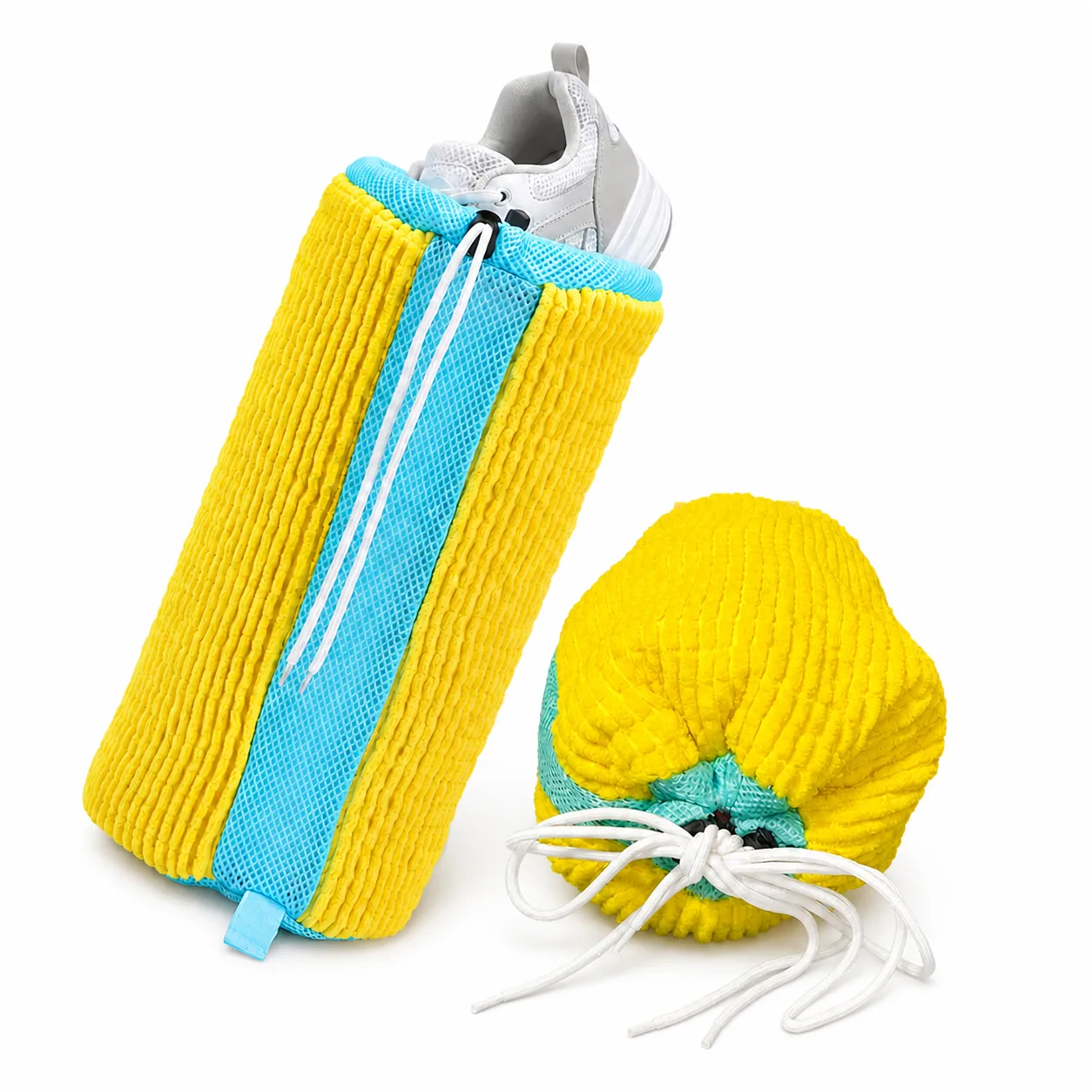
If the shoe maker explicitly permits a machine wash after the appropriate preparation, EMOZNY Shoe Washing Bags, 2 Pack can hold one shoe in each bag during that permitted load. The bags separate the pair; they do not select a stain treatment or decide whether a shoe belongs in the washer.
If the maker does not permit machine washing, stay with the maker's hand-cleaning route. Neither a bag nor a stain product changes the shoe's care boundary.
Use this pre-treatment check before cleaning
Pause before applying any treatment beyond the shoe maker's instructions.
- Identify the upper material and read the exact shoe maker's care guidance.
- Use a small, inconspicuous-area test when the maker's route calls for one.
- Keep a hand-cleaning instruction separate from machine-wash permission.
- Avoid assuming one mixture, detergent, or brush works for every material.
- Do not expect a pre-treatment step, bag, or wash method to guarantee stain or color results.
Frequently asked questions
Should I pre-treat every shoe stain before washing?
No. First check the care guidance for the exact shoe and material. A maker may provide a limited hand-cleaning route or ask for a small-area test instead of recommending a washer.
Can I spot test a cleaner before using it on a shoe?
New Balance asks users to test mild, dye-free detergent on an unnoticeable area before broader hand cleaning of its running and athletic shoes. Use that as source-scoped guidance and follow the instructions for the pair you have.
Does pre-treating a stain make a shoe safe to machine wash?
No. Nike and New Balance both keep their stain and hand-cleaning guidance separate from machine washing. The exact shoe maker's care instructions decide whether a washer is appropriate.
Can a shoe washing bag be used after stain treatment?
Only if the shoe maker permits machine washing for that pair. For a permitted load, place one shoe in each EMOZNY bag; the bag does not choose the treatment or override the shoe's care guidance.
Sources and scope
These sources provide general shoe-care and washer guidance. Instructions for the exact shoe model remain the final authority.
- Nike — Can You Put Sneakers in the Washer?Verified 2026-08-31. Supports Nike's no-machine-wash position, its source-scoped stain pre-treatment example, material cautions, hand cleaning, and air drying.
- New Balance — Product Care & MaintenanceVerified 2026-08-31. Supports a mild dye-free detergent, unnoticeable-area test, bristle-brush hand-cleaning route, air drying, and New Balance's separate no-washer/no-dryer guidance.